Wednesday, April 12, 2023

"Learning From Comrade Helen Keller"

 (Originally published at Jacobin as "Helen Keller Was One of the Great American Socialists")

In March 1915, the Workers’ Chronicle ran an article syndicated by Appeal to Reason, the most popular socialist newspaper in the United States, titled “Learning From Comrade Helen Keller.” The Chronicle was a weekly newspaper representing “the center of Socialism” in Kansas, a state in which Eugene Debs had won 7 percent of the vote in the previous presidential election on the Socialist Party of America (SPA) ticket.

Occasioned by a recent lecture Keller gave to the Central Teachers’ Association in Oklahoma City, the article praised the message being spread by “Comrade Keller” as both orator and example. In the lecture, Keller reiterated the stock tale of her journey from an uneducated blind and deaf seven-year-old to a world-famous college graduate, scholar, and author thanks to the innovative pedagogy employed by Anne Sullivan (of latter-day Miracle Worker fame).

She then proceeded to a brief discourse on the subject of happiness: “Not the pleasant things alone that one can get out of life, but the things that can be done for others are the ones worth striving for.”

“Her whole story,” reflected the Chronicle, “speaks eloquently of what can be done for all children everywhere, when sane economic conditions give them a chance to develop.”

This point was more than intimated by Keller herself during the lecture. When an audience member asked if it was true that she was a socialist, Keller — who had publicly accepted an offer of honorary membership in the Pittsburg, Kansas, local chapter of the SPA the previous year — quickly replied: “Oh, yes, because it is the only way out of the muddle humanity is in at the present time.”

Keller’s accomplishments, the Chronicle argued by way of conclusion, ought to both reproach and inspire

those of us who are sometimes discouraged by the seeming great odds against the Socialist movement. When but a fraction of the same willpower and determination that has characterized Helen Keller’s life is infused into the Socialist movement, the Co-operative Commonwealth will not be far distant.

Contradictions at Noontide

Aside from providing a glimpse into the breadth of popularity enjoyed by the socialist movement in the early twentieth-century United States, this vignette captures many of the contradictions that characterized the lives of both Helen Keller and the socialist movement during this period.

These contradictions orbit around questions of disability and the role of disabled people within social movements and society at large; ideology and theoretical conceptualizations of how social transformation occurs; political organization and the role of party formations in bringing about the socialist “commonwealth”; and, finally, intersectional tension and disjuncture in the person of Keller herself along lines of class, gender, disability, politics, and economics.

For many in the SPA during this era, the path to socialism in the United States was a simple, almost ineluctable, matter. They assumed that socialism was a perfectly rational conceptual model of society in contrast to that of capitalism, and that most people would ultimately accede to rational solutions when they were convincingly articulated (hence the title Appeal to Reason). Victory was thus merely a matter of spreading the gospel through an ever-expanding base of members, voters, newspapers, electoral candidacies, and government officeholders.

In this schema, the timetable of socialism mainly depended upon the degree of willpower exerted by its adherents. To this end, one could effectively deploy the archetype of Helen Keller as an impelling challenge to socialist activists. Of course, the unspoken premise behind such inspirational (or reproachful) appeals was that the readership of the Workers’ Chronicle, for instance, did not share Keller’s “endowed” deficits and therefore had little excuse for inactivity.

In a way, this inspiration-laden use of the persona of Helen Keller — as “she who overcame” disability — represents a mere conversion of the disability trope so often instrumentalized in a bourgeois framework: “If this unfortunate handicapped person can succeed in life, then you have no excuse!”

In the context of the socialist movement, such canards are even more jarring, as it is precisely among the lower and working classes of society that rates of disablement are disproportionately high. Moreover, working-class disabled people are far more likely to be impoverished, lacking advanced education and the kind of material resources that made such “miracles” as Helen Keller’s success possible.

While Keller explicitly and conscientiously recognized the difference between her own social circumstances and those of most disabled people, she nonetheless tended to lean into her “branding” as a sort of Wonder of the World. This in turn readily lent itself to such awe-inspired sentiments as were expressed by the Workers’ Chronicle.

It is important to note, however, that Keller had been virtually trained from childhood to play such a role — if not on behalf of the socialist movement, then at least on behalf of the progressive-reformist variant of bourgeois liberalism, which swelled between the 1880s and 1910s.

Tuesday, July 12, 2022

Review of "Class War: The Jacobin board game"

The Continuation of Politics by Other Means


(Originally published at Tempest)


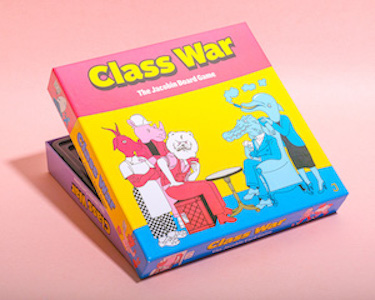
“Why,” you may be wondering, “is a socialist magazine doing a review of a board game?” Perhaps it is for the same reason that a socialist magazine would create and merchandise a board game. Announced on social media by Jacobin magazine in November 2021 as a crowd-funded Kickstarter project, Class War: The Jacobin Board Game was officially released for individual and retail distribution in May 2022.

Class War not only boasts the Jacobin imprimatur, but its design team comprises some of the primary names behind the magazine itself, including Jacobin editor Bhaskar Sunkara,. As stated in relevant materials and publicity, Jacobin views the game as both an entertainment and a “pedagogical” medium. “The gameplay is so addictive,” Jacobin asserts, “that even your libertarian uncle won’t be able to resist the world-historic struggle unfolding in the deck of cards before him.” At the same time, unwitting players “just might see, for the very first time, what a socialist perspective on our society’s class antagonisms really looks like.” 

Moreover, the act of buying and playing the game is intended to “support Jacobin’s important socialist journalism and analysis,” an effort aided by the penultimate page of the included Rule Book, which contains more information “About Jacobin” and on “Further Reading” (comprising a short list of mainly Jacobin-published texts such as The ABCs of Capitalism, The ABCs of Socialism, and The Socialist Manifesto).

Given the game’s explicitly dual character—as play and as propaganda—this review will examine Class War in detail on both counts, perhaps leaning in a bit harder on the political analysis. As it turns out, both the strengths and weaknesses of Class War as play and propaganda are immanently related to the strengths and weaknesses of Jacobin’s ideological approach to questions of socialist theory and strategy, reform and revolution, state power, and workers’ power.

The game mechanics and rules of Class War are relatively straight forward and make for a gradual learning curve, with a relatively moderate complexity level (closer to Exploding Kittens than Magic: The Gathering). As the game box states, 

“In Class War, you are a collective entity: a social class—either the Capitalists or the Workers. You’ll fight for social dominance in an unstable constitutional democracy… Classes will use money generated by workplaces to build their social power in society, using cards drawn from their deck. Then they will confront their opponent with a dice roll—in the economy, to win a greater slice of the economic pie, or in the state, to build political power. Ultimately, both classes aim to make their demands into law, permanently changing the rules of the game in their favor.”

I was initially very excited when the Kickstarter project for this game was announced. As a game enthusiast and socialist, I have long thought about how great it would be to have a game that coherently and effectively combined enthralling gameplay with the satisfaction of a simulated conquest of workers’ power over the forces of capitalist exploitation and oppression. Gaming, after all, is a medium that lends itself by design to the freest flight of imagination—to either escape from the misery of the real world in an excursion to another time, place, and even personality, or to embrace the hopes, dreams, and struggles of the real world in a fanciful glimpse of what it might entail to entirely change present society in the construction of a brighter future.

Perhaps my expectations were too high, but Class War sadly falls short of such lofty imaginings and even its own potential. However, let us start with what is good about the game, and why I would nonetheless recommend it for play with friends and comrades.

Monday, May 16, 2022

Review of "Woody Guthrie: An Intimate Life" | Disability Studies Quarterly

Originally published at Disability Studies Community Blog

Woody Guthrie: An Intimate Life
Gustavus Stadler
Beacon Press, 2020

Image of book cover featuring title and profile of Woody Guthrie
Woody Guthrie: An Intimate Life is an eponymous man-behind-the-myth look at an abiding figure of folk-music and left-wing Americana. Against the popular (and populist) conception of Guthrie as a rugged, rambling, and hardheaded archetype of freewheeling Old Left communist politics and salt-of-the-earth masculinity, author Gustavus Stadler presents a man whose life’s labors were informed by a profound awareness of vulnerability, fragility, and debilitation. An Intimate Life is also more than pure biography as it is an opportunity to explore the broader concepts of love, sexuality, disability, and communism in the context of the early-to-mid-twentieth century United States, as refracted by the personage of Guthrie. Though not a work of the Disability Studies genre, per se, the issues of normativity (and deviance), madness, impairment, and physiological stigma and shame are featured prominently throughout the book.

Indeed, this book is an intimate biography and a biography of the intimate. More than Guthrie’s strident politics or ideological journey, Stadler focuses on the private correspondences, diary writings, and personal friendships that reveal Guthrie as a deeply sensual human being. Rather than conjuring the image of a man violently strumming a guitar amidst the throes of revolutionary fervor, An Intimate Life elicits the sensation of a man delicately rolling a pencil between his fingers as he prepares to put innermost thoughts to paper. It is more Walt Whitman than Karl Marx, who is put into communion with Guthrie in this book. In describing the import of Guthrie’s semi-autobiographical novel, Bound for Glory, published in 1943, Stadler writes that it tells “the story of his [Guthrie’s] interest in troubled people and damaged bodies that needed intimate attention.” This includes scenes of “men improvising relations of care, of quasi-domesticity” while riding in train boxcars across the Midwest. It also significantly includes Guthrie’s “haunted” relationship with his mother, Nora, “through his deeply traumatized depiction of [her] decline,” due to Huntington’s disease.

Nora Guthrie began expressing increasingly acute symptoms of Huntington’s, viz. physiological and psychological loss of control, when Woody was still young. The people of the small Oklahoma town in which the Guthrie family lived began to comment derisively upon and shun Nora for being “crazy.” In 1927, Woody’s father had Nora committed to a state institution for the “insane,” where she died shortly thereafter. The young Woody, ignorant at the time of both the diagnosis and the heritability of Huntington’s disease, would have been shocked to know that a similar fate awaited him in his elder years. In fact, the adult Woody Guthrie of the 1950s was resistant to the Huntington’s diagnosis given to him by doctors; he instead attributed his advancing physiological and psychological impairments – and his increasingly frequent and extended stays in various state institutions and psychiatric hospitals around New York City – to alcoholism.

There are other often-overlooked elements of Guthrie’s story that Stadler gives extensive treatment to, such as the importance of his relationship with his long-time partner and wife, Marjorie Greenblatt Mazia; Guthrie’s fascination and complicated relationship with sex, sexuality, and homosexuality; and the abstract artistic expressionism of his later years, after he began exhibiting symptoms of Huntington’s, which focused on questions of racism, whiteness, and white supremacy in the U.S. Additionally, Stadler presents an even-handed, if not sympathetic, interpretation of Guthrie’s lifelong commitment to working-class revolutionary politics and the American communist movement, which enjoyed something of a surge in popularity in the New Deal 1930s.

From a disability and madness studies vantage the most interesting sections of An Intimate Life are to be found in the latter chapters of the book, which examine Guthrie’s experience with and reflections upon being institutionalized. Between 1956 and 1967, when he died at the age of fifty-five, Guthrie cycled between a number of state institutions, sometimes voluntarily and sometimes involuntarily. The conversations and observations he obtained from others in these institutions profoundly impacted him. ‘Shell-shocked’ war veterans, old leftists, ‘deviant’ victims of the 1950s persecution of homosexuality – such people furthered Guthrie’s awareness of the social effects of stigma, marginalization, and shame. Mediated by a callous and cruel capitalist social system and an imperious medical establishment, Guthrie saw in his fellow ‘patients’ not people who were primarily victims of their various diagnosed pathologies – many of whom Guthrie maintained were “sick in [their] own healthy [emphasis added] way” – but victims of a “crazy mixed up” society.

In a fascinating stroke of comparative insight, Stadler contextualizes Guthrie’s experience by making recourse to the apt poetry of Allen Ginsberg. In 1956, the same year that Guthrie entered the Greystone Psychiatric Hospital near New York City, Ginsberg published the famous poem, “Howl,” which references Greystone and other New York institutions, inhabited by “twenty-five thousand mad comrades.” When Ginsberg writes in the opening line of the poem, “I saw the best minds of my generation destroyed by madness,” he may well have had numerous specific names in mind, as Ginsberg witnessed many friends, contemporaries, and family members committed to institutions over the years, many of whom identified as communist, queer, or otherwise non-normative.

An Intimate Life has a lot to offer those interested in a diverse array of subjects. It is a story of the shifting ideological climate of the United States between the 1900s and 1950s, as working-class politics went from milieux of itinerant syndicalist organizing, to New Deal and Popular Front socialism, to revanchist and repressive Cold War anti-communism. It is a story of sexual politics, gender variance, and the socially-constructed deviance corresponding thereto. It is a story of American racism, lynch mobs, white supremacy, and critical self-reflective whiteness. It is a story of disability, illness, normativity, stigma, and institutionalization. And it is a story of love, romanticism, the beauty and bane of family intimacy, poetry, music, the sublime, and the sublimated.

Wednesday, February 9, 2022

Pandemic Accommodations Proved We Can Vastly Expand Disability Access If We Try | TRUTHOUT Interview

Originally published at TRUTHOUT, 23 January 2022

Keith Rosenthal interviewed by Danny Katch

The COVID pandemic has been a traumatic and revelatory historic experience for everyone, but especially so for disabled communities. On one hand, the virus appears to have had a disproportionately deadly impact on disabled people, and the government’s relentless push to restore “normal” business activities — already oppressive for disabled people — is cruelly discriminatory for those with immunocompromising conditions.

At the same time, governments and businesses have responded to the pandemic with flexible schedules and remote meetings that offer a glimpse into how readily society could provide accommodations to meet the needs of disabled workers and students. And as millions of previously nondisabled people find themselves applying for Americans with Disabilities Act (ADA) remote work accommodations or disability benefits due to “long COVID” symptoms, there is potential for building unprecedented levels of support for disability rights and justice.

Keith Rosenthal, editor of Capitalism and Disability: Selected Writings of Marta Russell, argues that the pandemic has forced all of society to suddenly confront the questions of accessibility and access that disabled people had previously struggled with on their own. In this interview, he talks about how the condition of disability is created less by people’s bodily limitations than capitalism’s cruel unwillingness to accommodate them — and why disability politics are relevant to anyone engaged in fighting for a more humane response to COVID and future public health crises.

Danny Katch: Government leaders across the country have pushed to get employees back in offices and keep students in school buildings even as COVID cases have spiked because of the highly contagious Omicron variant. What does this push to “return to normal” mean for immunocompromised people and others who remain especially vulnerable to serious illness and death from COVID even if they are vaccinated?

Keith Rosenthal: The director of the Centers for Disease Control and Prevention has been widely criticized by disabled people for recently saying that she was “really encouraged” that most deaths from Omicron seem to have occurred in “people who were unwell to begin with.” This statement may be written off as an individual gaffe. But the logic behind it is something that disabled people have been documenting and criticizing throughout the pandemic — ever since CEOs, financiers and politicians first floated the idea that some people might have to die in order for the economy to get back to a profitable place.

Whether stated openly or not, the implicit reality of what has been called “disaster capitalism” or “COVID capitalism” is that marginalized, vulnerable and so-called superfluous populations are being callously sacrificed by those who ruled over the pre-pandemic status quo to which they seek a return.

It is worth recalling that as of last June, over a third of all COVID deaths occurred in the nation’s nursing homes — over 180,000 elderly and younger disabled individuals. What’s worse, snap legislation was passed in New York and many other states that granted immunity to nursing home executives from any liability.

As for the return to school, firstly, it is simply not true that children cannot get sick from COVID. Second, the logic that COVID is not severe for most children ignores the significant number of immunocompromised or disabled children for whom COVID does remain a serious threat. If these children are not offered a remote learning option, they will also soon be counted among the numbers sacrificed in the name of a return to the “normal.” Or they will have to remain home, in a regressive turn to the educational conditions that prevailed over 50 years ago in which disabled children were segregated from the rest of their nondisabled peers and excluded from the public school system.

You recently wrote that one impact of the pandemic has been that society itself has become disabled. Can you elaborate on this point?

The implicit reality of what has been called “disaster capitalism” or “COVID capitalism” is that marginalized, vulnerable and so-called superfluous populations are being callously sacrificed.

The widespread character of COVID merely generalized what many disabled people experience as a regular feature of life under American capitalism. To put it in ADA terms, most people’s “major life activities” have been “substantially limited” by the pandemic — earning an income, taking care of family, eating, hygiene, leisure and recreation, etc.

In a physical or deficit-oriented sense, the ability of people to do all sorts of things has become substantially impaired. In another sense, however, disability is a social phenomenon, arising from conditions obtaining in the external world. We experience disablement as a function of not only the biology of the virus itself but also prevailing political and workplace policies, health care and social service infrastructures, community networks of solidarity, as well as racism, sexism, class inequality, poverty, homelessness, etc.

The United States is constituted in a way that makes it particularly disabling to those who become affected by such crises. With COVID, that crisis and consequent disablement was experienced by broad swathes of the population. Most of the people so affected would probably not think of themselves as experiencing a form of disability oppression. But that is in fact essentially what disablement is.

Wednesday, October 13, 2021

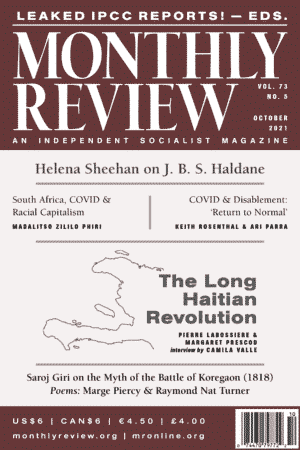
COVID, Disablement, and the “Return to Normal”

Originally published at Monthly Review (October 2021, vol. 73, no. 5)

==

by Keith Rosenthal and Ari Parra

It has been one and a half years since the COVID pandemic first took on a widespread national character within the United States. During this span of time, we have witnessed the punctuated cessation of public, social, and economic activity; conflicts and controversies over mask mandates and stay-at-home recommendations; panic over the rationing of everything from the mundane to the serious, toilet paper to hospital beds and ventilators. The virus itself was talked about as a universalizing pathogen that did not discriminate; a threat to each and all of us. Meanwhile, anecdotal and quantitative data began to depict the vastly unequal impact that the pandemic was having on certain demographics of the population—people of color and Black people in particular, Indigenous communities, poor and working-class populations, and especially elderly and disabled people living in nursing homes and congregate long-term care facilities (along with the perhaps less-documented populations of homeless people and disabled people on the verge of entering nursing homes).1

Suddenly, the nation and the world seemed to find itself living in a protracted emergency variant of reality. From “normal” existence, society metamorphosed into a prolonged state of “abnormality.” Virtually all aspects of social and economic life, previously taken for granted, became inaccessible by degrees to vast numbers of the populace. Physical movement, gathering with friends and family, the desire to meet new people and possible intimates, travel, shopping, even going to a bar or restaurant, all became eminently restricted tasks. Daily activities of personal care and hygiene occupied more and more of people’s functional time and mental concern. The basic process of leaving the house required a great deal of pre-planning and preparation. Anxieties escalated around people’s ability to continue engaging in, or go about finding, paid work that would accommodate their restrictions and needs, and whether their employer would offer paid sick leave if they or a dependent became infected. Access to adequate, affordable, and safe health care likewise became a more generalized and potentially fatal concern. In a word, society itself had become disabled—disabled by the coronavirus; disabled by the actions or inactions of various ruling and hegemonic institutions; disabled by the preexisting social, political, and economic conditions of an unequal and individualistic capitalist society.

Through it all, the watchword of virtually all politicians occupying positions of power within the ruling circles of government—regardless of party affiliation or political persuasion—has been the aim of a “return to normal.” This sentiment resonated broadly across a public chafing under the disabling conditions of pandemic existence. The development and widespread distribution of a vaccine seemed to be the single beacon of hope—even as the novel strain of the coronavirus mutated into more robust and resilient variants, potentially requiring booster shots and additional vaccinations.2 It is as if the pandemic purgatory we have been stuck in was a detour off the main road, one wending laterally from the “normal,” desired route. Generalized immunity, then, stands in prospect as an on-ramp back to society’s proper timeline, back to the pre-pandemic vector, back to a “normal” future.

Abnormality Is a Preexisting Condition

For many disabled people in the United States and around the world, however, the abnormal state of things over the last year and a half is not such an estranged discontinuity from the previous state of things. Certainly, just like everyone, pandemic life for disabled people has been exceedingly difficult, painful, oppressive, and deadly. But the “normal” of pre-pandemic life was also exceedingly difficult, painful, oppressive, and deadly. To be disabled in contemporary capitalist society is to live in a permanent state of socially constructed “abnormality.” Illustrator Sam Schäfer, for example, has aptly depicted this phenomenon in a series of graphics on disabled people and the pandemic, published online in early 2021.3

In one of the panels in the comic titled “And Now Here We Are,” Schäfer writes: “We died the same way many of us lived: in hospital, isolated, stuck indoors, financially struggling, isolated.” As the caption explains: “Each point is illustrated with an empty hospital bed, a silhouette sat in a jar, a closed door, a broken sad and very adorable piggy bank with little coins in it, and nothing.” A subsequent panel features the words: “Every day I see people wishing for things to go back to normal. Back to the way things were. Where we were still suffering and dying.” The inscription accompanies a drawing of crutches lying abandoned on a patch of grass beneath a rainbow and sunshine.4